

What is the difference in performance between a spoiler and a wing on a sport motorcycle
2026-05-11
When upgrading a sport motorcycle for better aerodynamics, riders often confuse a Motorcycle Spoiler with a racing wing. Understanding the performance difference is critical for both safety and speed. Ai Cheng specializes in precision aerodynamic components, helping riders make data-driven choices between these two distinct parts.
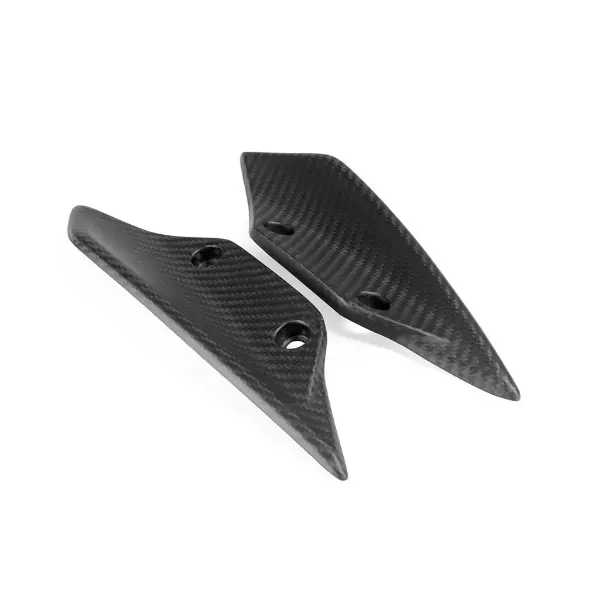
Spoiler vs. Wing on a Sport Motorcycle – Key Performance Differences
| Feature | Motorcycle Spoiler | Racing Wing |
|---|---|---|
| Primary function | Reduce drag and manage airflow separation | Generate downforce |
| Mounting position | Rear tail section or under the front cowl | Fork legs, side fairings, or rear subframe |
| Effect on top speed | Slight increase (less turbulence) | Slight decrease (added drag) |
| Effect on cornering | Minimal direct effect | Significant tire grip increase |
| Best for | Highway stability and fuel economy | Track grip and wheelie control |
A Motorcycle Spoiler works by breaking up turbulent air behind the rider, reducing low-pressure drag. Ai Cheng designs spoilers that redirect airflow away from the rider’s back, improving straight-line stability at high speeds. In contrast, a wing creates negative lift (downforce) by accelerating air beneath it, pushing tires onto the pavement. Wings are essential for preventing front-end lift during hard acceleration out of corners.
When Performance Overlaps – And When It Does Not
| Scenario | Motorcycle Spoiler | Wing |
|---|---|---|
| 150+ km/h sweeping turns | No noticeable grip change | Noticeable front tire load |
| Wet riding conditions | No negative effect | Can reduce water spray on rider |
| Aerodynamic braking stability | Minor benefit | Major benefit (less rear lift) |
| Legal for street use | Yes, in most regions | May be restricted on public roads |
Common Misconception: A larger Motorcycle Spoiler does not equal more downforce. Ai Cheng emphasizes that spoilers manage drag, while wings manage vertical force. Adding a wing without suspension tuning can make a sport motorcycle unstable during braking.
Motorcycle Spoiler FAQ – Common Questions Answered
Q1: Can a Motorcycle Spoiler replace a wing for track racing?
A: No. A Motorcycle Spoiler reduces drag and improves high-speed stability but generates almost no downforce. On a racetrack, you need downward pressure on the front wheel during corner entry and on the rear wheel during exit. A wing provides that vertical load. Ai Cheng advises using a spoiler for endurance racing (fuel saving) and a wing for sprint racing (corner speed).
Q2: Will adding a Motorcycle Spoiler increase my sport motorcycle’s top speed?
A: Yes, but only slightly. By smoothing airflow behind the rider, a well-designed Motorcycle Spoiler from Ai Cheng can reduce aerodynamic drag by 4–7%, which typically adds 2–4 km/h to top speed on a 200+ km/h sport motorcycle. However, a wing usually reduces top speed by 5–8 km/h due to induced drag. For maximum top speed runs, use a spoiler only.
Q3: Do I need to retune my suspension after installing a Motorcycle Spoiler or a wing?
A: For a Motorcycle Spoiler, suspension changes are usually unnecessary because no significant downforce is added. But for a wing, Ai Cheng strongly recommends adjusting front fork preload and rear shock compression damping. A wing generating 15–20 kg of downforce at 200 km/h will alter pitch balance. Without retuning, the motorcycle may understeer or feel vague mid-corner.
Choose the right part based on your riding goal
-
Street and touring riders: A Motorcycle Spoiler from Ai Cheng improves comfort and efficiency with no handling side effects.
-
Track day enthusiasts: A wing provides measurable grip gains, but you must also upgrade suspension.
-
Mixed use: Run both? Only if the spoiler is placed behind the rider and the wing is low-mounted near the fork – otherwise airflow interference reduces both downforce and drag reduction.
Contact us today at Ai Cheng for a personalized aerodynamic analysis. Our engineers will help you select between a Motorcycle Spoiler or a wing based on your bike model, riding style, and speed goals. Reach out via our website or email for a free consultation and mounting guide.