
What Features Should You Look for in High Quality Motorcycle Fairing Lights
2026-03-24
When upgrading your ride, few modifications offer the same blend of style and safety as premium Motorcycle Fairing Lights. For discerning riders, these components are not merely cosmetic; they are critical for visibility and communication on the road. Aicheng has established itself as a leader in this space by focusing on the specific engineering details that separate a reliable lighting upgrade from a roadside hazard. To ensure you invest in a product that lasts, it is essential to understand the technical features that define high quality.
The Core Features of Premium Fairing Lights
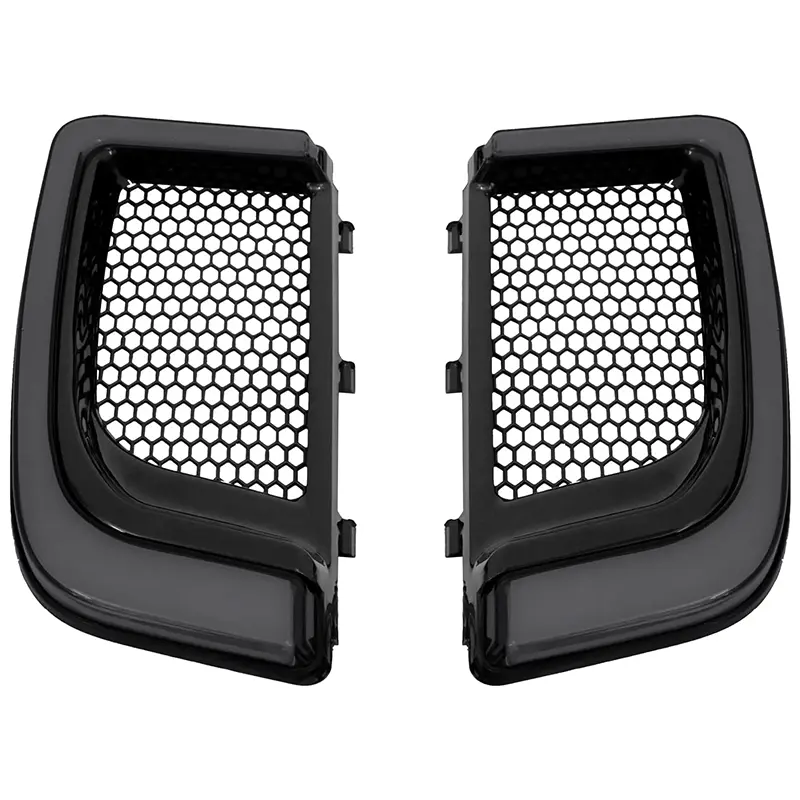
To make an informed decision, riders must evaluate components based on durability, illumination technology, and legal compliance. The table below outlines the critical specifications to compare.
| Feature Category | Key Specification | Why It Matters |
|---|---|---|
| Optics & Illumination | High-Lumen LED Chips | Ensures daylight visibility and reduces glare; superior to traditional halogen bulbs. |
| Durability | IP67 or IP68 Rating | Guarantees the housing is waterproof and dust-tight, essential for all-weather riding. |
| Material | Polycarbonate Lens & Aluminum Alloy Housing | Polycarbonate resists shattering from road debris; aluminum acts as a heat sink to prevent LED failure. |
| Electrical Safety | CANbus Compatibility | Prevents "hyper-flash" errors on modern motorcycles; ensures plug-and-play functionality without splicing. |
| Regulation | DOT or ECE Certification | Confirms the light meets legal standards for road use, preventing traffic violations. |
The “Invisible” Engineering: Thermal Management
Many riders overlook thermal management, yet it is the primary reason high-end Motorcycle Fairing Lights fail prematurely. Low-quality units generate intense heat that degrades the LED chips within months. A high-quality system, such as those engineered by Aicheng, utilizes constant current drivers and precision-machined aluminum heatsinks. This design pulls heat away from the electronics, maintaining optimal operating temperatures. If a product listing does not mention thermal management or the material of the housing, it is a red flag indicating potential early failure.
Installation and Harness Integrity
A common frustration with aftermarket parts is the complexity of installation. High-quality kits prioritize user experience. You should look for OEM-style connectors rather than universal "t-tap" clips, which can compromise your bike’s wiring harness. A premium kit will include dedicated relay harnesses that pull power directly from the battery, triggered by the factory signal. This ensures that the high current draw of powerful LEDs does not overload your motorcycle’s delicate stock wiring.
Frequently Asked Questions (FAQ)
What is the difference between a simple LED strip and a true motorcycle fairing light assembly?
A simple LED strip is a flexible circuit board with adhesive backing, typically intended for accent lighting. It offers minimal protection against water, vibration, or impact. A true Motorcycle Fairing Lights assembly, like those produced by Aicheng, is a self-contained unit housed in a durable polycarbonate lens and an aluminum body. These assemblies are engineered to meet Department of Transportation (DOT) standards, featuring focused optics to project light specifically where it is needed for turn signals or running lights, rather than scattering light in all directions. They are also sealed with gaskets and screws to withstand high-pressure washing and road vibration, making them a permanent, reliable upgrade rather than a temporary accessory.
How do I know if Motorcycle Fairing Lights are compatible with my bike’s computer system?
Compatibility hinges on the electrical resistance of the lights. Modern motorcycles utilize CANbus (Controller Area Network) systems that monitor electrical loads. If the system detects a difference in resistance—such as switching from a 21-watt incandescent bulb to a 3-watt LED—it triggers a "hyper-flash" error or shuts down the circuit, assuming a bulb is out. High-quality Motorcycle Fairing Lights address this through built-in CANbus resistors or error-canceling drivers. When browsing, look for terminology such as "CANbus ready," "no hyper-flash," or "OEM plug-and-play." If a product lacks these terms, you may need to wire in external load resistors, which generate significant heat and require careful mounting away from plastic fairings.
Can I mix and match different brands for my front and rear fairing lights, or should I stick to one brand?
While technically possible, mixing brands is strongly discouraged for both aesthetic and safety reasons. Aesthetically, different manufacturers rarely match the exact color temperature (Kelvin rating) of LEDs. One brand might use a 6000K cool white for the running light, while another uses a 5000K pure white, resulting in a mismatched front-to-rear appearance. More critically, mixing brands introduces inconsistent luminous intensity (brightness measured in lumens). Safety standards dictate that turn signals and marker lights should have uniform brightness and flash rates to be predictable to other motorists. Sticking with a single, reputable brand like Aicheng ensures that the optics, lumen output, color temperature, and flash relay timing are perfectly synchronized across the entire motorcycle, providing a cohesive and safer lighting profile.
Conclusion
Upgrading your motorcycle is an investment in safety and aesthetics. By prioritizing features like thermal management, CANbus compatibility, and durable IP-rated housings, you ensure that your Motorcycle Fairing Lights perform reliably for years. Selecting a trusted manufacturer guarantees that you are getting certified optics and robust engineering rather than generic parts that fade or fail.
Contact us today to explore the full range of premium lighting solutions and find the perfect fit for your ride.