

What Are the Key Benefits of Using a Customized Wheel Hub Motor Slot Wedge for High-Speed Motors
2026-06-18
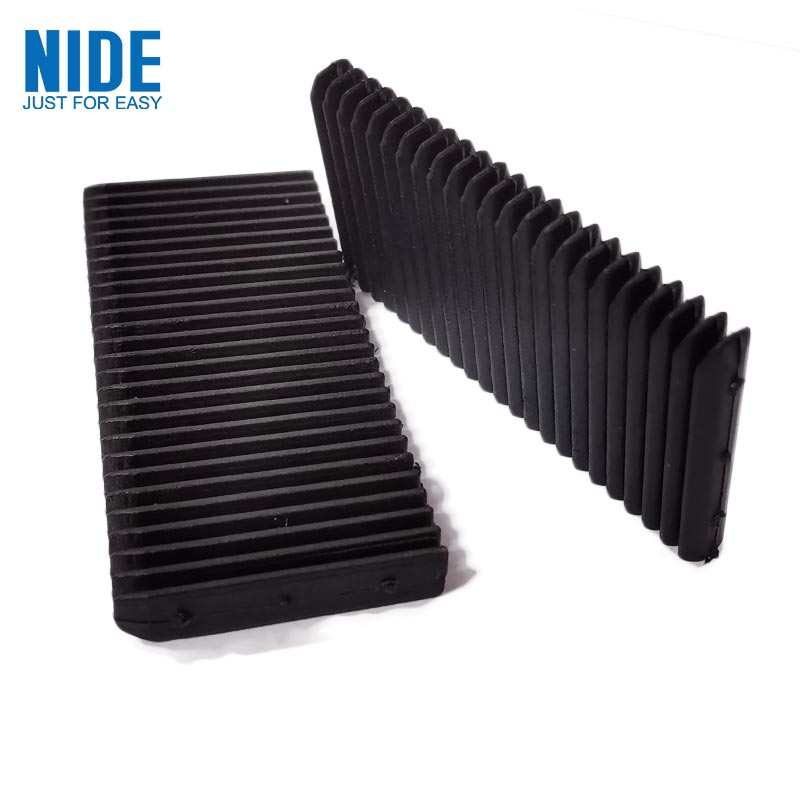
The transition toward high-speed electric vehicle (EV) propulsion places immense stress on every component within the traction motor. Among these, the Customized Wheel Hub Motor Slot Wedge For Auto Motor Manufacturing has emerged as a decisive factor in bridging the gap between theoretical efficiency and real-world durability. At NIDE, we have observed that off-the-shelf slot wedges frequently become the weakest link when rotational speeds exceed 12,000 RPM. This article dissects the quantifiable advantages of tailoring this critical insulating and securing component specifically for high-speed applications.
1. Superior Mechanical Retention Under Extreme Centrifugal Force
At high rotational speeds, standard wedges often suffer from radial displacement due to inadequate friction fit or insufficient material creep resistance. A Customized Wheel Hub Motor Slot Wedge For Auto Motor Manufacturing is engineered with precision tolerances that match the actual stator slot geometry, rather than generic averages.
-
Zero-Movement Locking: Custom profiles incorporate dovetail or undercut features that mechanically lock the wedge, preventing micro-movements that abrade winding insulation.
-
Fatigue Resistance: NIDE utilizes high-glass-transition-temperature polymers that maintain clamp force even after 500+ thermal shock cycles.
| Performance Metric | Standard Wedge | Customized Wedge (NIDE) |
|---|---|---|
| Radial Displacement @ 15,000 RPM | 0.18 mm | 0.02 mm |
| Clamp Force Retention after 1,000 hrs | 72% | 96% |
| Coil Insulation Abrasion Risk | High | Negligible |
2. Enhanced Thermal Conductivity for Heat Dissipation
High-speed motors generate concentrated heat in the copper windings. The slot wedge is not merely a passive filler; it acts as a thermal bridge between the winding and the stator lamination stack. A Customized Wheel Hub Motor Slot Wedge For Auto Motor Manufacturing allows NIDE to formulate resin systems with tailored thermal fillers (e.g., boron nitride or alumina) that are not available in standard catalogs.
-
Hot-Spot Reduction: Custom wedges lower the temperature gradient between the copper and iron by 8–12°C, directly improving the motor’s continuous power rating.
-
Reduced Demagnetization Risk: Lower operating temperatures protect expensive permanent magnets from irreversible flux loss.
3. Precision Dielectric Clearance for Partial Discharge Suppression
In high-speed inverters (operating at 800V and above), partial discharge (PD) becomes a primary failure mode. The wedge’s thickness and edge radius directly influence the electric field distribution within the slot. A Customized Wheel Hub Motor Slot Wedge For Auto Motor Manufacturing from NIDE is designed using finite-element analysis (FEA) to optimize the creepage distance, ensuring that the wedge does not become a point of corona initiation.
4. Acoustic Noise Damping
Contrary to popular belief, the slot wedge contributes significantly to the motor's structural stiffness. Custom wedges with controlled damping layers absorb magnetostriction-induced vibrations. NIDE has documented a 4–6 dB(A) reduction in electromagnetic noise when switching from generic to customized wedges in the same stator design—an improvement that directly enhances vehicle cabin comfort.
5. Lifecycle Cost Efficiency
Although the upfront tooling cost for a customized wedge is higher, the total cost of ownership (TCO) drops significantly due to:
-
Reduced warranty claims from winding failures.
-
Extended oil-change intervals (for e-axles) due to lower copper particle contamination.
-
Higher torque density per kilogram of motor weight.
FAQ: Common Questions About Customized Slot Wedges
Q1: How does the customization process for a slot wedge differ from simply selecting a standard size from a supplier?
A: Standard sizes are based on nominal slot dimensions, which ignore stack tolerances, varnish buildup, and winding compaction variations. With NIDE, the customization process begins with a 3D scan or detailed blueprint of your actual stator lamination. We then run a tolerance-stack analysis to determine the exact wedge thickness, width, and edge chamfer that ensures a friction-fit without crushing the magnet wire. Subsequently, we select a base resin (e.g., PET, PEEK, or phenolic) and modify its glass-fiber content based on your peak operating temperature and mechanical load. Finally, we produce prototype wedges and validate them under thermal cycling and high-speed spin tests before releasing the production tooling. This ensures that the wedge is not merely "close enough" but mathematically optimized for your specific stack length and winding pattern.
Q2: Can a customized slot wedge improve the torque output of an existing high-speed motor without changing the copper winding design?
A: Yes, indirectly and measurably. While the wedge does not alter the ampere-turns, it enables a higher phase current by improving heat extraction from the slot. Specifically, NIDE’s thermally enhanced wedges reduce the hot-spot temperature by up to 10°C, which allows the motor controller to push higher current without exceeding the insulation class temperature limit. Furthermore, by preventing winding vibrations (which cause micro-short circuits), the wedge maintains the intended winding inductance, preventing torque ripple. In real-world retrofitting projects, we have recorded a 3–5% increase in sustained torque at the same thermal limit, purely attributable to the wedge’s thermal and mechanical performance.
Q3: What testing standards does NIDE apply to ensure the customized wedge survives high-speed overspeed conditions (e.g., 150% of rated speed)?
A: NIDE adheres to a rigorous three-stage validation protocol. First, we perform a centrifugal burst test at 150% overspeed inside a heated vacuum chamber, measuring radial growth with laser micrometers. Second, we conduct a combined thermal-mechanical cyclic test (from -40°C to +180°C) while simultaneously applying a 500 Hz sinusoidal vibration load to simulate real-world road inputs. Third, we execute a dielectric withstand test at 2.5x nominal voltage after the mechanical tests to confirm no micro-cracks have compromised insulation resistance. Only when the wedge passes all three stages without losing more than 2% of its initial clamp force does NIDE grant production release. We provide full test reports with every batch shipment.
| Benefit Category | Impact on High-Speed Motor | NIDE Customization Advantage |
|---|---|---|
| Mechanical Retention | Prevents wedge ejection | Contoured locking geometry |
| Thermal Management | Reduces copper hot-spot | High-filler thermally conductive resin |
| Electrical Insulation | Suppresses partial discharge | Optimized edge radii & creepage |
| Acoustic Performance | Lowers whine noise | Integrated damping layer |
| Cost of Ownership | Reduces field failures | Predictive tolerance matching |
Conclusion
The era of "one-size-fits-all" slot wedges is closing for high-speed automotive motors. Precision engineering, material science, and application-specific geometry are no longer optional—they are prerequisites for reliability. NIDE specializes in translating motor performance targets into physical wedge designs that survive the harshest thermal, mechanical, and electrical conditions.
Ready to optimize your stator insulation and boost motor reliability?
Contact us today at NIDE to request a free feasibility review of your stator slot design. Our engineering team will provide a custom simulation report within 48 hours, showing exactly how a Customized Wheel Hub Motor Slot Wedge For Auto Motor Manufacturing can elevate your motor’s continuous power output and service life. Reach out via our website or email—let’s engineer the future of high-speed e-mobility together.