

How Do Electric Motorcycle Motors Improve Performance and Customization?
2026-09-21
Electric motorcycles are becoming an important option for modern urban transportation, delivery services, recreational riding, and specialized mobility applications. At the center of every electric motorcycle is its motor, which determines how efficiently electrical energy is converted into mechanical power. The right Electric Motorcycle Motors can influence acceleration, climbing capability, riding stability, energy consumption, noise, and overall operating experience. For manufacturers and OEM buyers, motor selection is therefore not simply a matter of choosing a power rating. Motor structure, torque output, thermal management, installation method, and customization capability all need to match the intended vehicle design.
For businesses developing different types of electric motorcycles, working with an experienced motor manufacturer can also make product development more flexible. Ningbo Qianjiang Motor Co., Ltd. focuses on motor solutions designed around practical application requirements, providing customized options for customers seeking reliable power systems and differentiated vehicle designs.
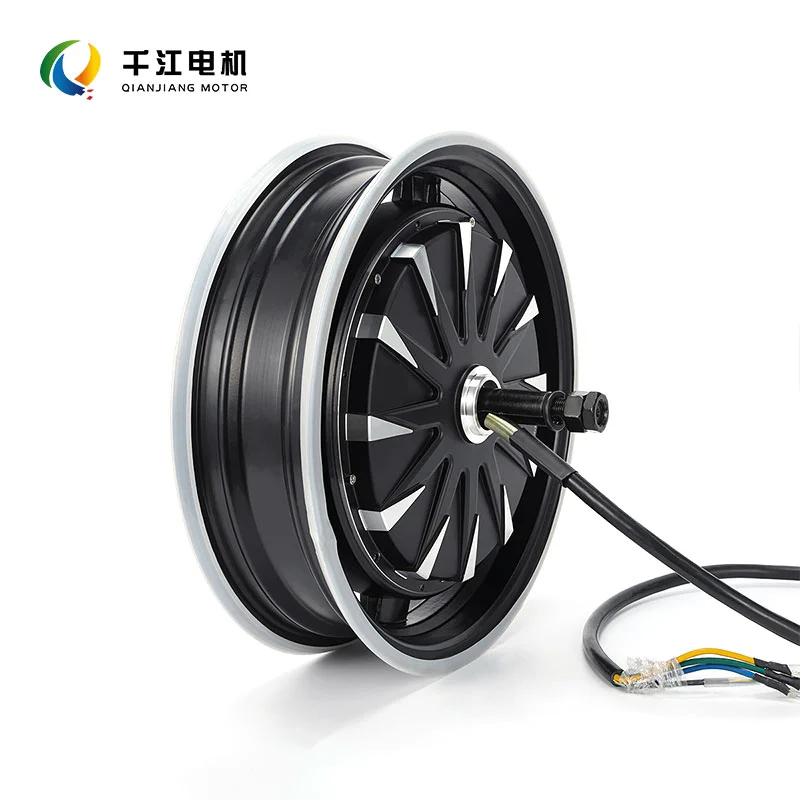
What Makes Electric Motorcycle Motors Important?
An electric motorcycle motor converts electrical energy from the battery into rotational mechanical energy that drives the wheels. Its performance directly affects the motorcycle's acceleration, maximum operating speed, climbing ability, load capacity, and riding response.
A motor with suitable torque can provide stronger low-speed acceleration and better hill-climbing performance. Meanwhile, efficient energy conversion can help reduce unnecessary battery consumption and improve the practical riding range.
For commercial buyers, the importance of the motor goes beyond riding performance. A properly selected motor can also contribute to:
-
More consistent power delivery
-
Better energy utilization
-
Reduced operating noise
-
Improved thermal performance
-
Lower maintenance requirements
-
Greater adaptability to different motorcycle structures
-
More flexible OEM and ODM development
Recent technical research also shows that motor, battery, controller, and power-control parameters work together to determine the balance between torque and efficiency. This means that motor performance should be evaluated as part of the complete electric powertrain rather than as an isolated component.
Which Motor Structure Fits Different Applications?
Two common configurations are hub motors and mid-drive motors. Their mechanical structures produce different riding characteristics and installation requirements.
| Feature | Hub Motor | Mid-Drive Motor |
|---|---|---|
| Installation | Integrated into wheel | Mounted in central frame |
| Mechanical structure | Relatively simple | More integrated with drivetrain |
| Low-speed response | Strong and direct | Strong with suitable gearing |
| Hill performance | Depends heavily on motor torque | Can benefit from transmission ratios |
| Maintenance | Generally simple | Requires more drivetrain consideration |
| Weight distribution | More weight at wheel | More centralized |
| Typical application | Urban, commuter, lightweight models | Performance, cargo, climbing applications |
Hub motors can offer a straightforward drivetrain structure because the motor is integrated into the wheel. Mid-drive systems can use transmission ratios to multiply torque and adapt motor operating speed to different terrain conditions. Technical comparisons generally identify hub motors as simple solutions for many flat-road applications, while mid-drive systems can provide advantages where terrain and load conditions vary significantly.
Therefore, manufacturers should select the architecture according to the motorcycle's intended use instead of focusing only on nominal wattage.
How Do Electric Motorcycle Motors Affect Riding Performance?
The practical performance of an electric motorcycle depends on several motor parameters rather than a single specification.
Torque
Torque, measured in Newton-metres (Nm), represents rotational force. Higher available torque can improve acceleration and climbing performance, particularly when the motorcycle carries additional weight or operates on slopes.
Power
Motor power determines how much mechanical energy can be delivered over time. However, power should be evaluated together with torque, controller settings, battery voltage, and operating speed.
Efficiency
Motor efficiency describes how effectively electrical input is converted into mechanical output. Higher efficiency can reduce energy losses and heat generation under appropriate operating conditions.
Thermal Management
Continuous high-load operation can generate substantial heat. Effective heat dissipation is particularly important for motorcycles used for delivery, cargo transportation, long-distance riding, or frequent hill climbing.
Control Compatibility
The motor should work properly with the controller, battery, sensors, and other powertrain components. A well-matched system can provide smoother acceleration and more predictable power delivery.
What Are the Real-World Effects of Choosing the Right Motor?
Choosing the right Electric Motorcycle Motors can produce noticeable improvements in everyday use.
For urban commuters, a properly matched motor can deliver smooth starts, responsive acceleration, and efficient operation during frequent stop-and-go riding.
For delivery motorcycles, torque and thermal performance become particularly important because the vehicle may operate for extended periods while carrying additional loads.
For recreational or performance-oriented motorcycles, higher power density, responsive control, and optimized weight distribution can influence acceleration and handling.
The key effects can be summarized as follows:
-
Smoother acceleration: Appropriate torque characteristics help prevent inconsistent power delivery.
-
Improved climbing: Suitable torque and gearing can provide stronger performance on inclines.
-
Better energy utilization: Efficient motor operation can reduce unnecessary electrical losses.
-
More reliable operation: Proper thermal management helps maintain performance under demanding conditions.
-
Flexible vehicle development: Customized motor dimensions and interfaces allow manufacturers to develop different motorcycle platforms.
Why Does Customization Matter for Electric Motorcycle Motors?
Not every electric motorcycle uses the same frame, wheel size, battery arrangement, controller, or application environment. Standard motors may therefore create limitations during vehicle development.
Customization allows manufacturers to consider the motor as part of the overall vehicle architecture. Important customization areas can include:
-
Motor dimensions
-
Mounting structure
-
Shaft and connection design
-
Rated voltage
-
Rated power
-
Torque requirements
-
Speed range
-
Cooling configuration
-
Controller compatibility
-
Housing structure
-
External appearance
-
Special application requirements
For OEM and ODM customers, this flexibility can shorten the distance between an initial vehicle concept and a production-ready power solution.
How Does Boat-Shaped Customization Add Design Flexibility?
One distinctive advantage worth highlighting is boat-shaped customization. While electric motorcycle motors are normally designed for conventional two-wheel applications, specialized projects may require unusual housing or external structural forms.
Ningbo Qianjiang Motor Co., Ltd. supports boat-shaped customization, allowing customers to explore specialized motor structures according to their product concepts and installation requirements. This capability can be particularly valuable when a motor needs to be integrated into a non-standard mechanical layout or a vehicle design with unique spatial constraints.
Boat-shaped customization can provide additional flexibility in areas such as:
-
Special-shaped motor housings
-
Customized external structures
-
Non-standard installation environments
-
Prototype development
-
OEM vehicle projects
-
Specialized mobility equipment
This approach gives product developers more freedom to consider the motor during the early design stage rather than redesigning the vehicle around a fixed standard motor.
What Should Buyers Consider Before Selecting a Motor?
B2B buyers should evaluate the complete application before confirming a motor specification. A practical selection process can include the following questions:
1. What type of motorcycle is being developed?
Commuter, delivery, cargo, recreational, performance, or specialized motorcycles may require different motor characteristics.
2. What load will the vehicle carry?
Passenger and cargo weight can significantly influence the required torque.
3. What terrain will the motorcycle operate on?
Flat urban roads have different requirements from mountainous or high-gradient environments.
4. What battery system will be used?
Voltage and current limits need to be compatible with the motor and controller.
5. Is customized installation required?
If the frame or mounting structure is non-standard, customized motor dimensions may be necessary.
6. Is long-term production required?
For OEM projects, stable manufacturing capability and consistent specifications are important for maintaining product quality across production batches.
Why Work With Ningbo Qianjiang Motor Co., Ltd.?
For electric motorcycle manufacturers, the value of a motor supplier is not limited to supplying a finished component. Engineering support, customization capability, production consistency, and application understanding can all affect the success of a vehicle project.
Ningbo Qianjiang Motor Co., Ltd. provides a flexible approach to Electric Motorcycle Motors, supporting customers who require customized solutions instead of one-size-fits-all products. Its capabilities can help OEM and ODM customers develop motors around specific motorcycle structures, performance requirements, and specialized applications.
The ability to support boat-shaped customization further expands the design possibilities for customers working on non-standard products. Instead of restricting vehicle development to conventional motor shapes, customized structures can be considered according to the actual installation environment and product concept.
Final Thoughts
The motor is one of the most important components in an electric motorcycle because it directly influences power delivery, acceleration, climbing performance, energy consumption, thermal behavior, and riding experience. Selecting Electric Motorcycle Motors should therefore involve a comprehensive evaluation of torque, power, efficiency, structure, controller compatibility, installation requirements, and long-term application conditions.
For OEM and ODM buyers, customization is equally important. From conventional hub and mid-drive configurations to specialized structural requirements, flexible motor development can provide greater freedom during vehicle design. With support for boat-shaped customization, Ningbo Qianjiang Motor Co., Ltd. offers an additional option for customers seeking distinctive and application-specific motor solutions.
If you are developing a new electric motorcycle, upgrading an existing powertrain, or looking for customized motor structures for a specialized project, contact us to discuss your application requirements and explore a suitable Electric Motorcycle Motors solution.